


Waterhouse Friderichsen Syndrome Osmosis
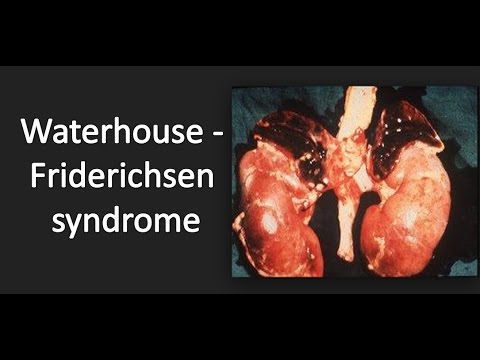
Waterhouse friderichsen syndrome pathophysiology. Waterhouse-Friderichsen syndrome is a rare clinical condition first described by Rupert Waterhouse and Carl Friderichsen as bilateral adrenal hemorrhage in the setting of bacterial sepsis among children in the first decade of the 20th century 2. Waterhouse-Friderichsen syndrome Waterhouse-Friderichsen syndrome WFS is a group of symptoms resulting from the failure of the adrenal glands to function normally as a result of bleeding into the gland. The WaterhouseFriderichsen syndrome WFS also known as purpura fulminans is a potentially lethal condition described as acute hemorrhagic necrosis of the.
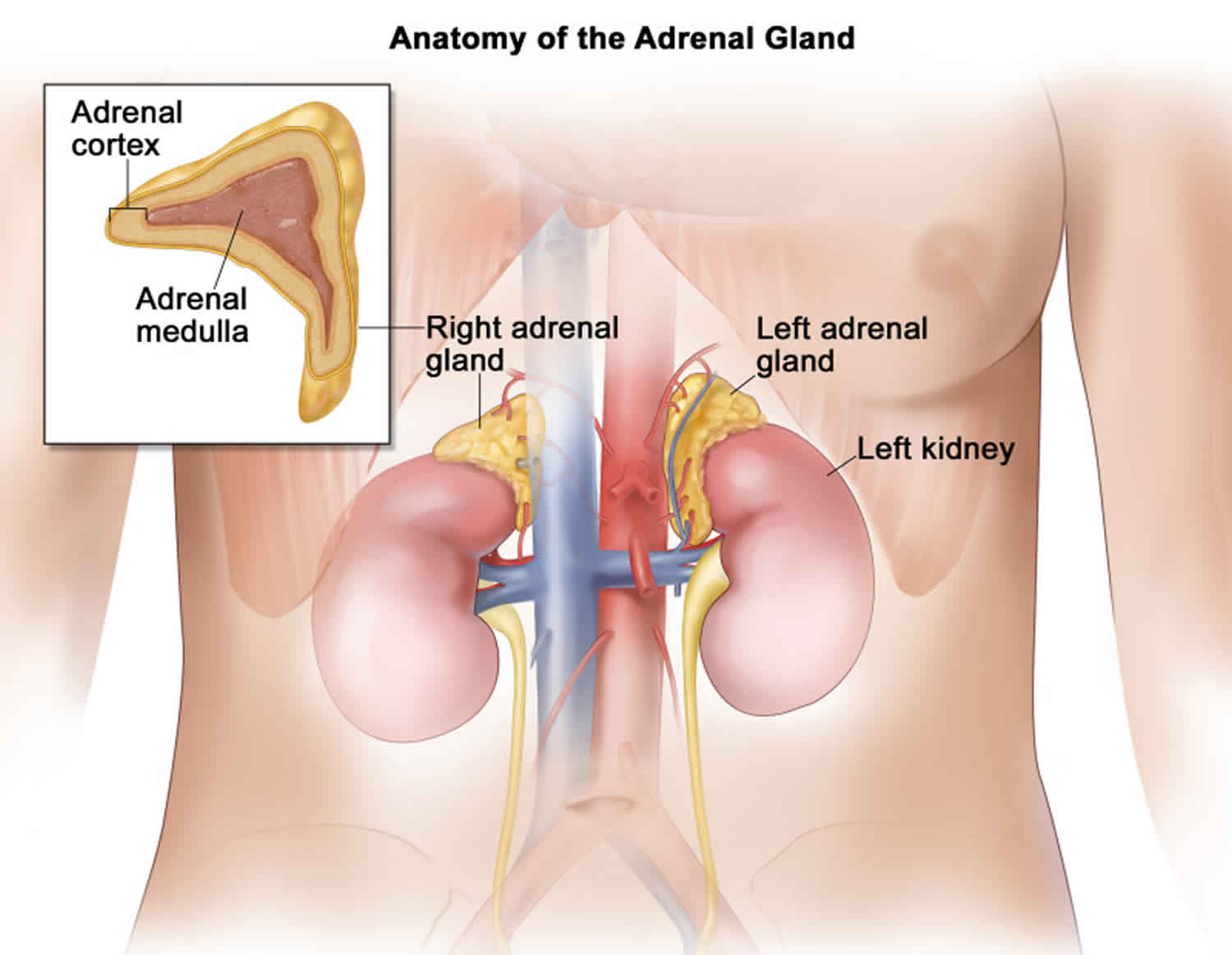
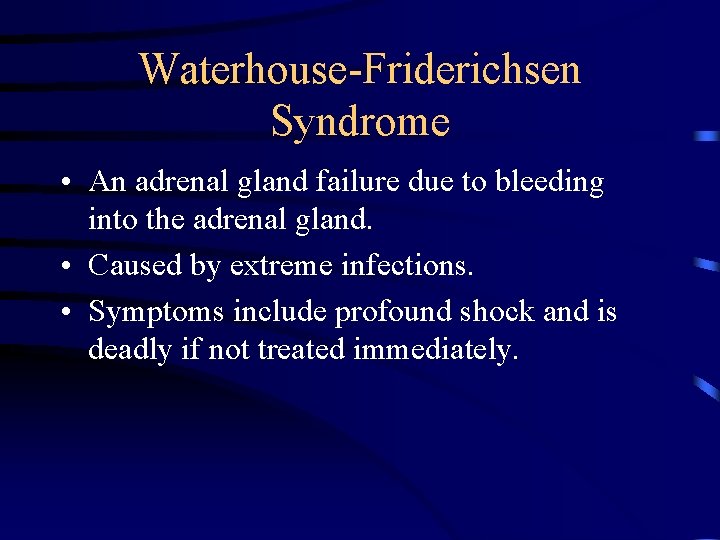
WaterhouseFriderichsen syndrome is adrenal gland failure due to bleeding into the adrenal gland. Definition general. Less common causes are burns cardiac failure hypothermia and birth trauma.
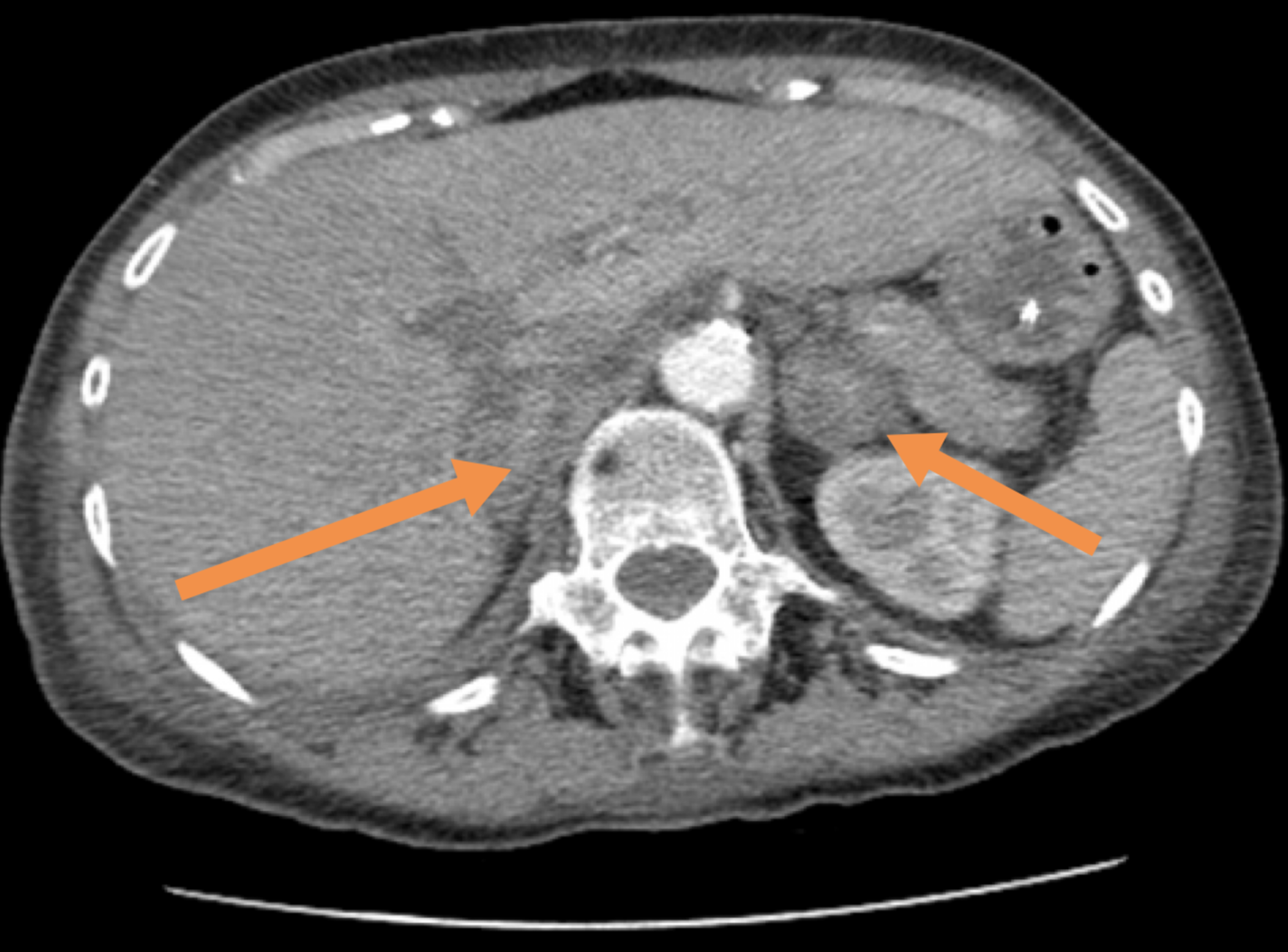
Over the years there have been reports of bilater. Waterhouse Friderichsen syndrome is a rare but life-threatening disorder associated with bilateral adrenal hemorrhage. Over the years there have been reports of bilateral adrenal hemorrhage in association with multiple causes including various.
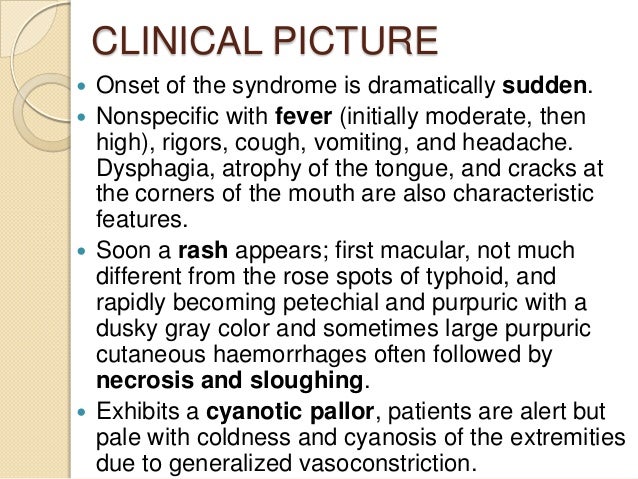
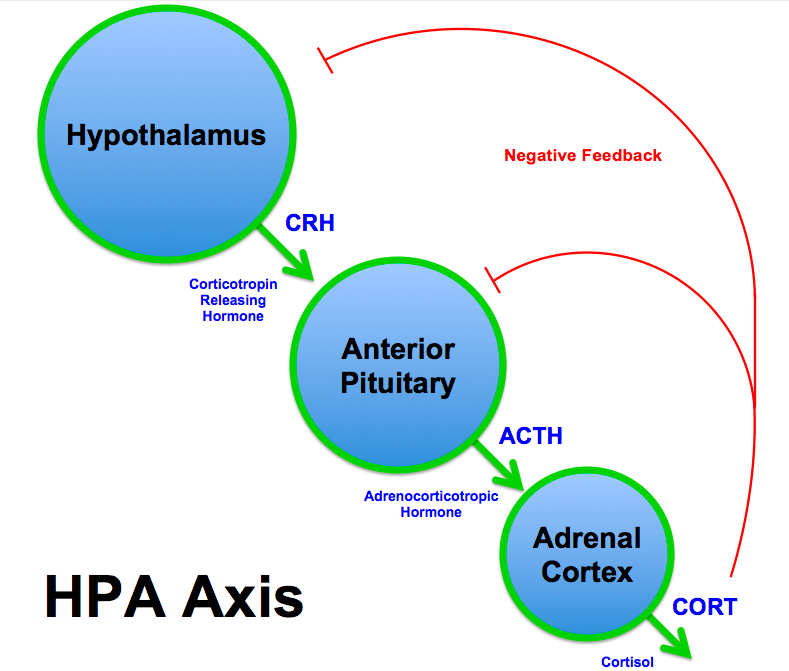
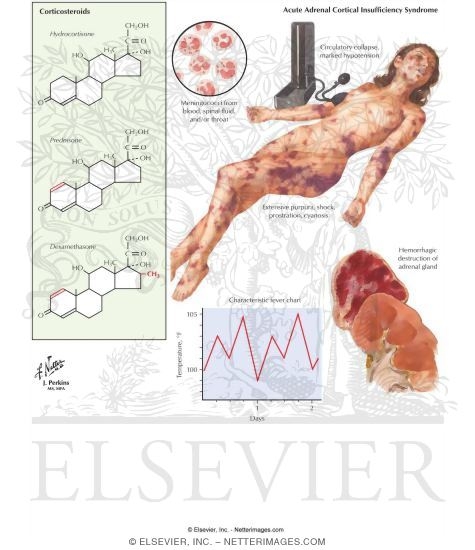
Although the precise mechanisms leading to adrenal hemorrhage are unclear in nontraumatic cases available evidence has implicated adrenocorticotropic hormone ACTH adrenal vein. Waterhouse-Friderichsen syndrome also known as purpura fulminans 9 or hemorrhagic adrenalitis 10 is characterized by adrenal insufficiency that results from atraumatic adrenal hemorrhage in consequence of septicemia. These symptoms ultimately progress into massive organ failure coma shock low blood pressure and sepsis.
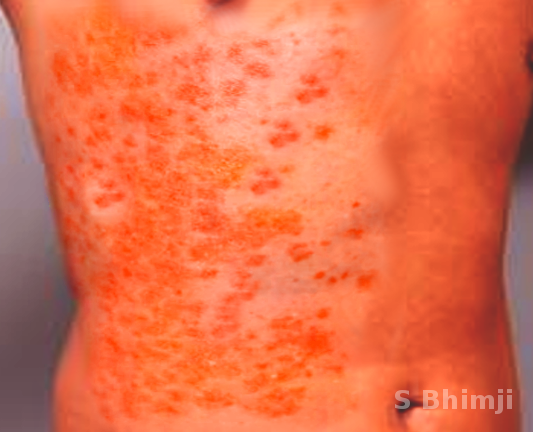
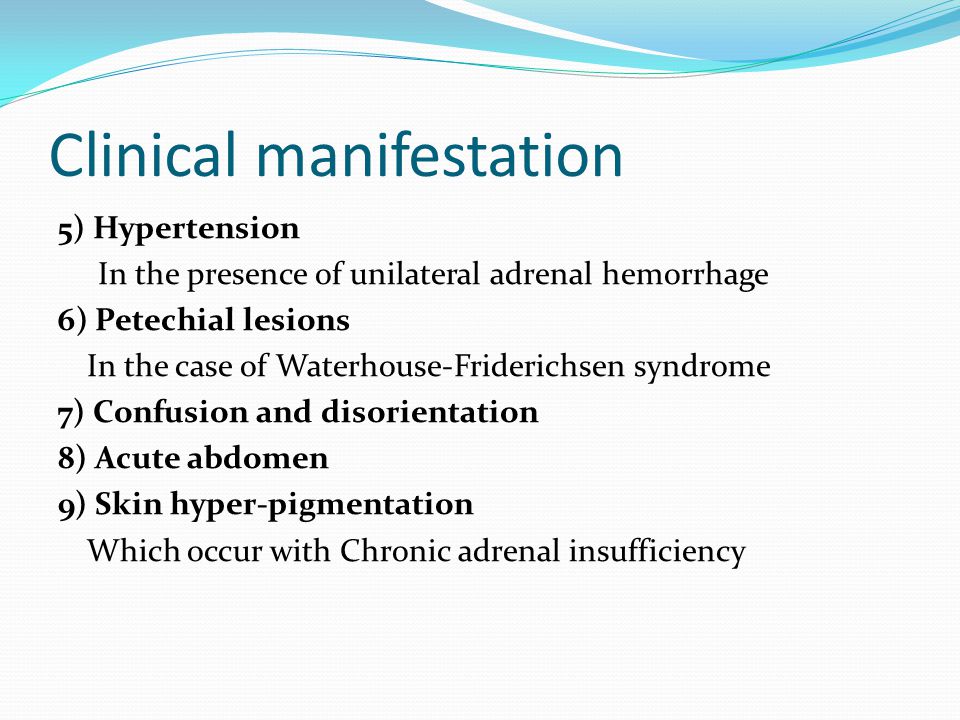
Overview of Waterhouse-Friderichsen Syndrome. Waterhouse-Friderichsen syndrome is characterized by the abrupt onset of fever petechiae arthralgia weakness and myalgias followed by acute hemorrhagic necrosis of the adrenal glands and. Waterhouse-Friderichsen syndrome a rare type of septicemia blood poisoning of rapid and severe onset marked by fever collapse and sometimes coma hemorrhage from skin and mucous membranes and severe bilateral hemorrhage of the adrenal cortical tissue.
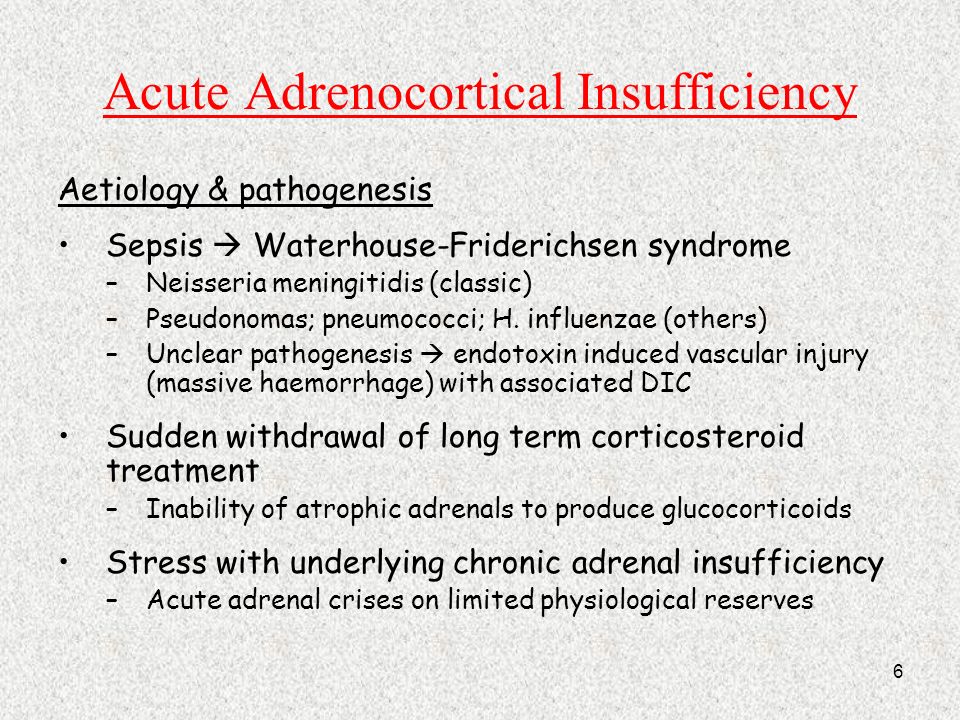
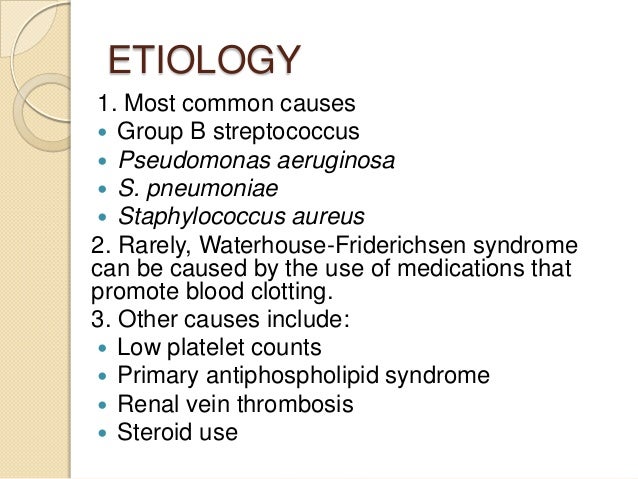
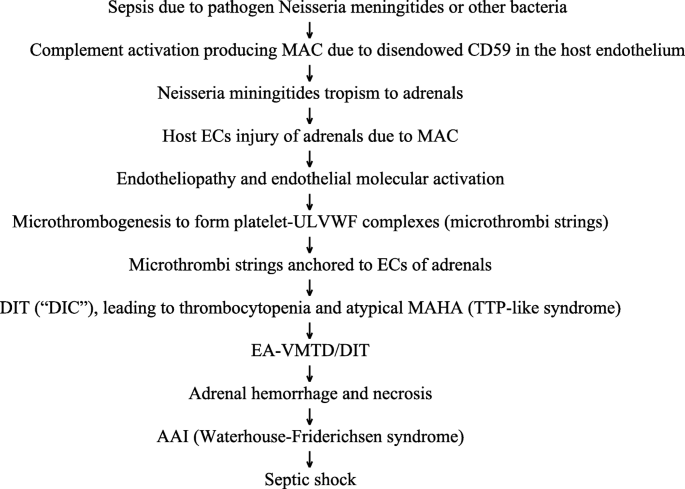
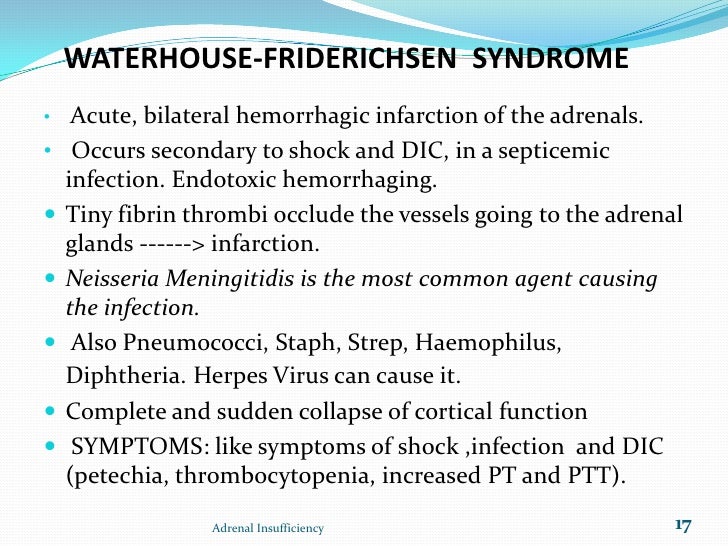
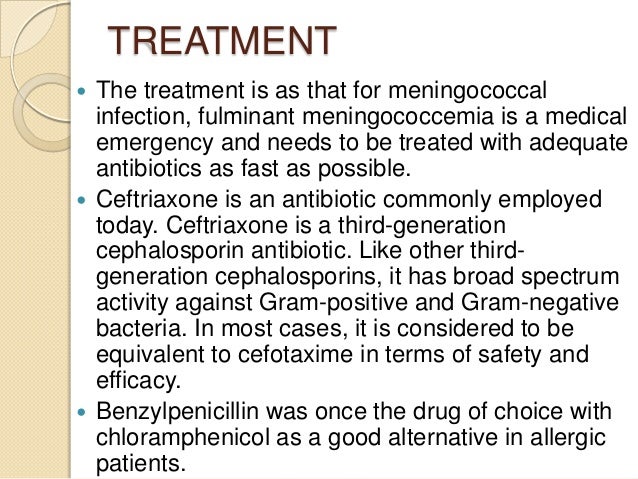
The WaterhouseFriderichsen syndrome WFS is associated with some infectious diseases leading to substantial morbidity by producing acute adrenal insufficiency associated with hemorrhage and dysfunction of the suprarenal glands at a time when their response is crucial to address acute stress Table163. Also Pseudomonas aeruginosa pneumococci staphylococcus and historically Haemophilus influenzae. It is usually caused by severe meningococcal infection or other severe bacterial infection.
Waterhouse-Friderichsen syndrome WFS is a group of symptoms resulting from the failure of the adrenal glands to function normally as a result of bleeding into the gland. Waterhouse-Friderichsen Syndrome WFS is a condition characterized by adrenal gland failure caused by bleeding into adrenal glands as a result of severe bacterial infection the most common of which is the meningococcus Neisseria meningitidis.

Pdf Neisseria Meningitidis Induced Fatal Waterhouse Friderichsen Syndrome In A Patient Presenting With Disseminated Intravascular Coagulation And Multiple Organ Failure
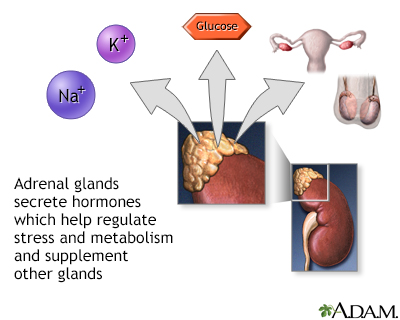
Waterhouse Friderichsen Syndrome Information Mount Sinai New York

Waterhouse Friderichsen Syndrome An Overview Sciencedirect Topics
Waterhouse Friderichsen Syndrome Wfs

Waterhouse Friderichsen Syndrome Osmosis
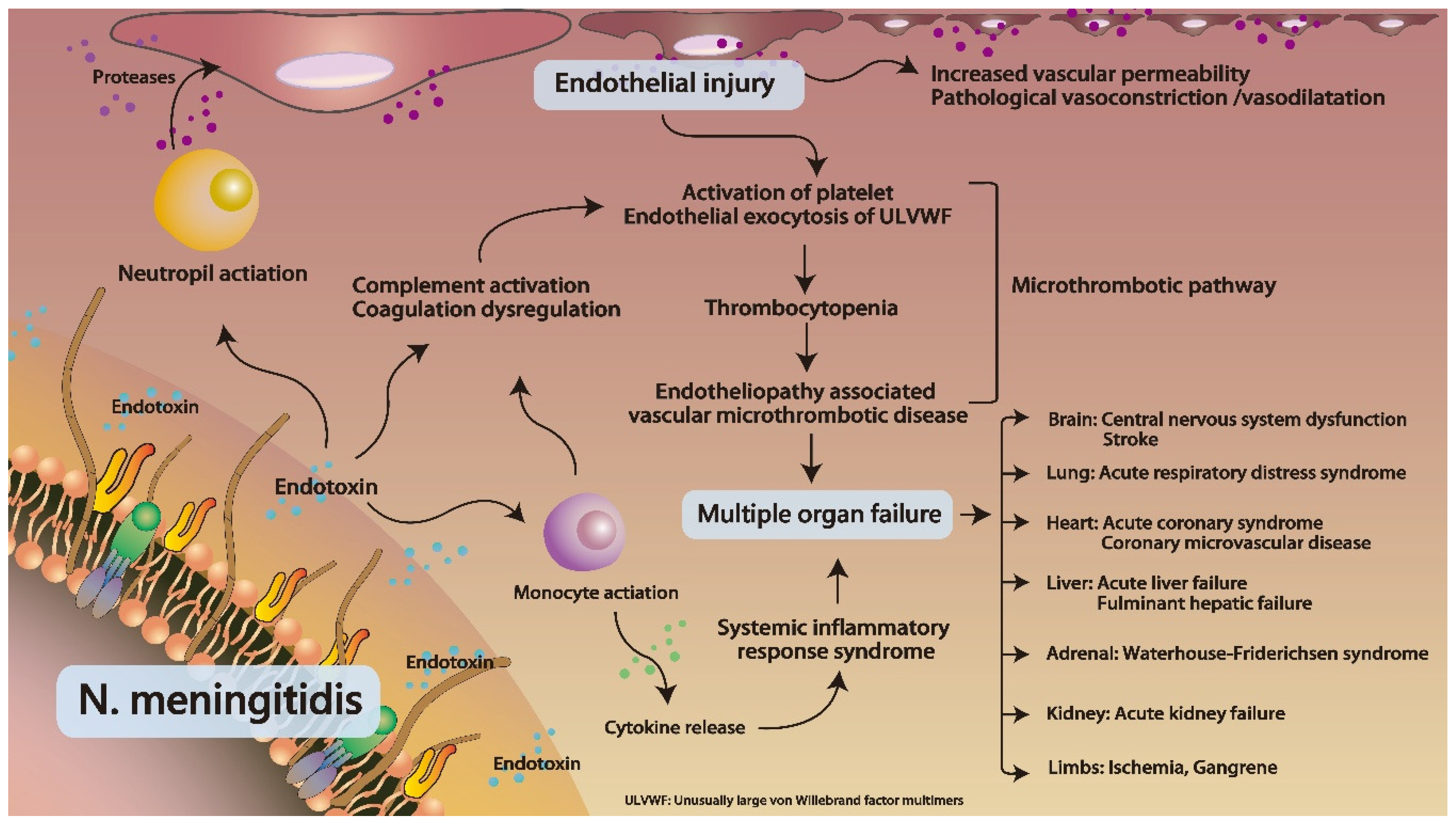
Brain Sciences Free Full Text Neisseria Meningitidis Induced Fatal Waterhouse Friderichsen Syndrome In A Patient Presenting With Disseminated Intravascular Coagulation And Multiple Organ Failure Html
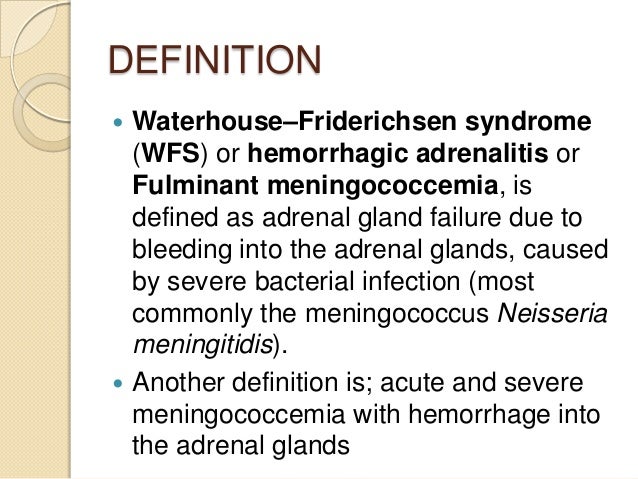
Waterhouse Friderichsen Syndrome Wfs

Sepsis And Septic Shock Endothelial Molecular Pathogenesis Associated With Vascular Microthrombotic Disease Abstract Europe Pmc
Waterhouse Friderichsen Syndrome Wfs Youtube

Case 98
Zona Glomerulosa Zona Fasiculata Zona Reticularis Ppt Download
Figure 1 From Systematic Review Of 62 Cases Of Adrenal Haemorrhage And Insufficiency A Potential Mechanism Of Critical Illness Associated Adrenal Dysfunction Semantic Scholar

Pathological Findings Of The Waterhouse Friderichsen Syndrome A Download Scientific Diagram
Sepsis And Septic Shock Endothelial Molecular Pathogenesis Associated With Vascular Microthrombotic Disease Thrombosis Journal Full Text
Waterhouse Friderichsen Syndrome Wfs

Sepsis And Septic Shock Endothelial Molecular Pathogenesis Associated With Vascular Microthrombotic Disease Abstract Europe Pmc
Waterhouse Friderichsen Syndrome Article
Waterhouse Friderichsen Syndrome Causes Symptoms Diagnosis Treatment Prognosis
Waterhouse Friderichsen Syndrome Wfs

Adrenal Insufficiency Pathology Review Osmosis
Addison S Disease Pathophysiology Wikidoc
Case Of The Week Ppt Video Online Download

Cureus A Rare Case Of Waterhouse Friderichsen Syndrome Without Purpura Secondary To Haemophilus Influenzae
Https Encrypted Tbn0 Gstatic Com Images Q Tbn And9gcqxjyoikyfjirbrggnkku Xnas7vnvwuutpzxjwbkf07j7mbi8x Usqp Cau
Sepsis And Septic Shock Endothelial Molecular Pathogenesis Associated With Vascular Microthrombotic Disease Thrombosis Journal Full Text
Adrencortical Hypofunction

Waterhouse Friderichsen Syndrome Youtube
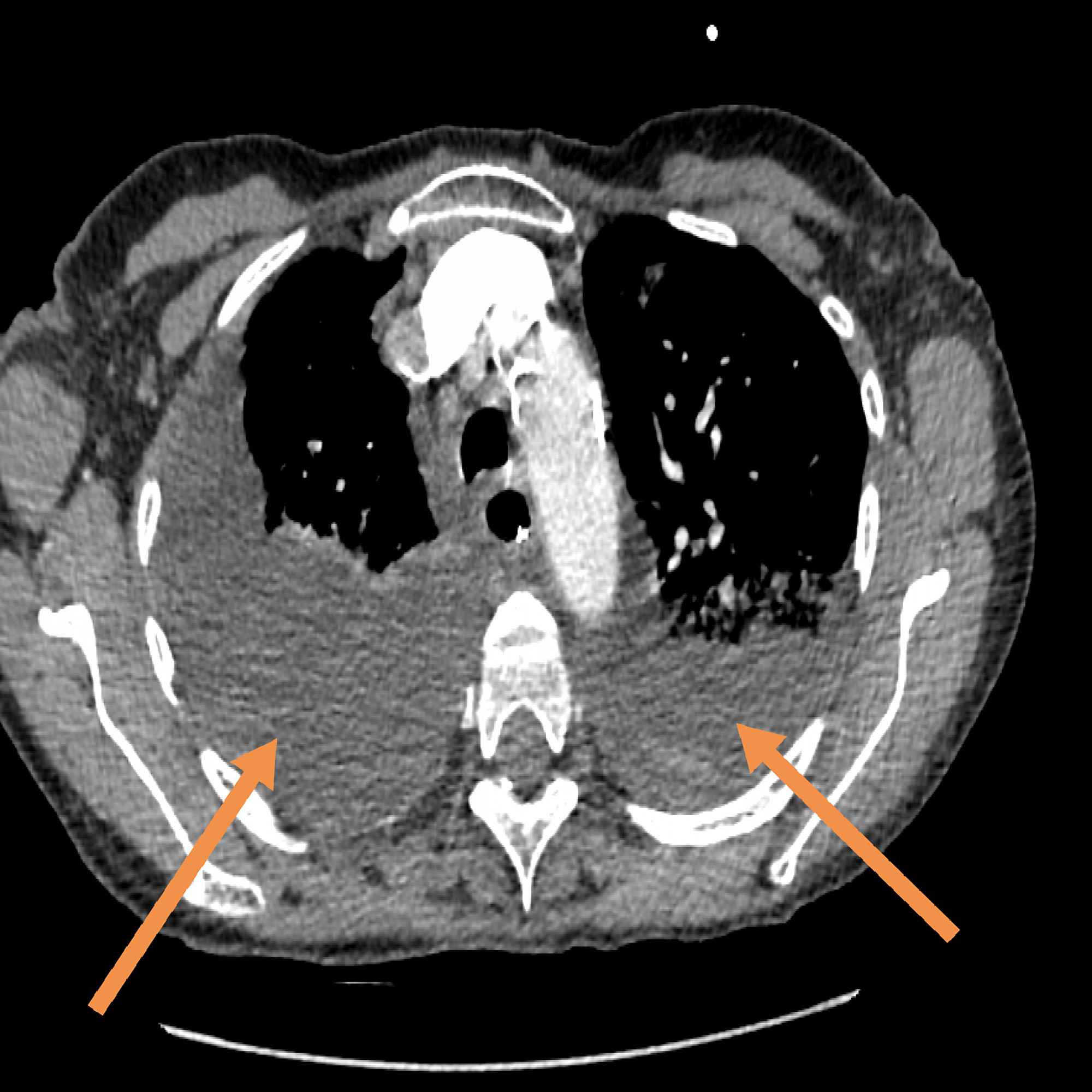
A Rare Case Of Waterhouse Friderichsen Syndrome Without Purpura Secondary To Haemophilus Influenzae Cureus

Adrenal Insufficiency Amboss

Qnwhd1 6mihn6m
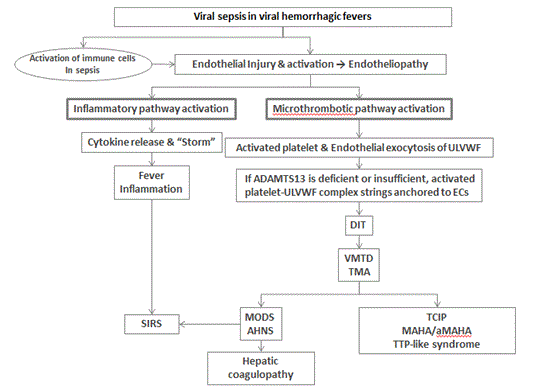
Viral Hemorrhagic Fevers Due To Endotheliopathy Associated Disseminated Intravascular Microthrombosis And Hepatic Coagulopathy Pathogenesis Based On Two Activation Theory Of The Endothelium
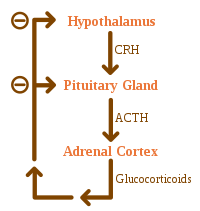
Addison S Disease Wikipedia
2
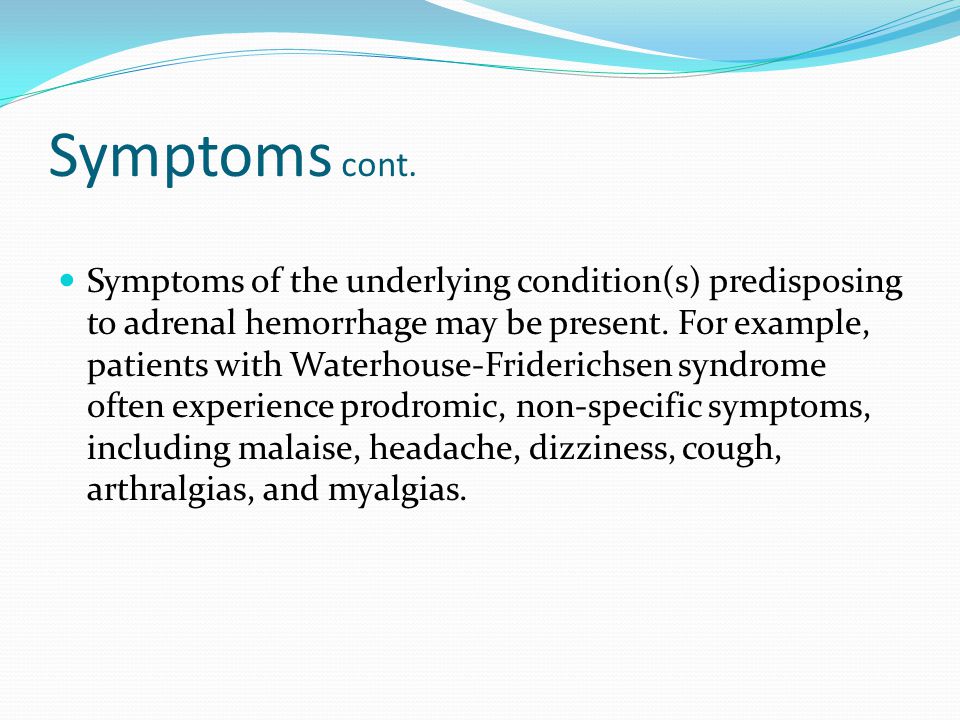
Case Of The Week Ppt Video Online Download

Fatal Waterhouse Friderichsen Syndrome In An Adult Due To Serogroup Y Neisseria Meningitidis Bmj Case Reports

Bacterial Meningitis In Children The Lancet
Acute Adrenal Insufficiency Waterhouse Friderichsen Syndrome

Imaging Of Nonmalignant Adrenal Lesions In Children Radiographics

Adrenal Insufficiency Amboss

Purpura Fulminans Emcrit Project

Dsa 6 Adrenal13 Adrenal Gland Glands

Pdf Neisseria Meningitidis Induced Fatal Waterhouse Friderichsen Syndrome In A Patient Presenting With Disseminated Intravascular Coagulation And Multiple Organ Failure

Adrenal Gland Pathology
Adrenal Gland Description Adrenal Glands Are Triangular Shaped
Cureus A Rare Case Of Waterhouse Friderichsen Syndrome Without Purpura Secondary To Haemophilus Influenzae

Waterhouse Friderichsen Syndrome Information Mount Sinai New York

Waterhouse Friderichsen Syndrome Osmosis
Waterhouse Friderichsen Syndrome Wfs
Https Encrypted Tbn0 Gstatic Com Images Q Tbn And9gctomxu6urhzvbegmpc8mg2yupw Hfjpvgqntw G9lavfwf5j Nt Usqp Cau
The WaterhouseFriderichsen syndrome WFS also known as purpura fulminans is a potentially lethal condition described as acute hemorrhagic necrosis of the.
Waterhouse Friderichsen syndrome is a rare but life-threatening disorder associated with bilateral adrenal hemorrhage. Symptoms include acute adrenal gland insufficiency and profound shock. Although the precise mechanisms leading to adrenal hemorrhage are unclear in nontraumatic cases available evidence has implicated adrenocorticotropic hormone ACTH adrenal vein. Waterhouse-Friderichsen syndrome is characterized by the abrupt onset of fever petechiae arthralgia weakness and myalgias followed by acute hemorrhagic necrosis of the adrenal glands and. Over the years there have been reports of bilateral adrenal hemorrhage in association with multiple causes including various. Hemorrhagic necrosis of adrenal glands usually due to bacteremia classically Neisseria meningitides. These symptoms ultimately progress into massive organ failure coma shock low blood pressure and sepsis. Less common causes are burns cardiac failure hypothermia and birth trauma. WaterhouseFriderichsen syndrome is adrenal gland failure due to bleeding into the adrenal gland.
The WaterhouseFriderichsen syndrome WFS also known as purpura fulminans is a potentially lethal condition described as acute hemorrhagic necrosis of the. Hemorrhagic necrosis of adrenal glands usually due to bacteremia classically Neisseria meningitides. Overview of Waterhouse-Friderichsen Syndrome. Waterhouse-Friderichsen syndrome is characterized by the abrupt onset of fever petechiae arthralgia weakness and myalgias followed by acute hemorrhagic necrosis of the adrenal glands and. Over the years there have been reports of bilateral adrenal hemorrhage in association with multiple causes including various. The WaterhouseFriderichsen syndrome WFS is associated with some infectious diseases leading to substantial morbidity by producing acute adrenal insufficiency associated with hemorrhage and dysfunction of the suprarenal glands at a time when their response is crucial to address acute stress Table163. Waterhouse-Friderichsen syndrome WFS is a group of symptoms resulting from the failure of the adrenal glands to function normally as a result of bleeding into the gland.





![[No Verfication] Dreamarket.App Dream League Soccer 2020 News Proof 999,999 Diamons and Coins](https://lh3.googleusercontent.com/blogger_img_proxy/AEn0k_sEBD-66Ky4qf1YNxssO1jLT3KZdbz661Xdx_b2z9KMt5pPop2NKynzhaTElwiaBztjF_si7EuM7ln0FhXdKDY4730RUDkx0rnUFqQCFNo4JoxP5FgXnew=w100)


0 Yorumlar